ARTIST FLAG-PARTICIPATION ART-COLLABORATIVE PROJECT
The flag created in 16 minutes by 8 people.
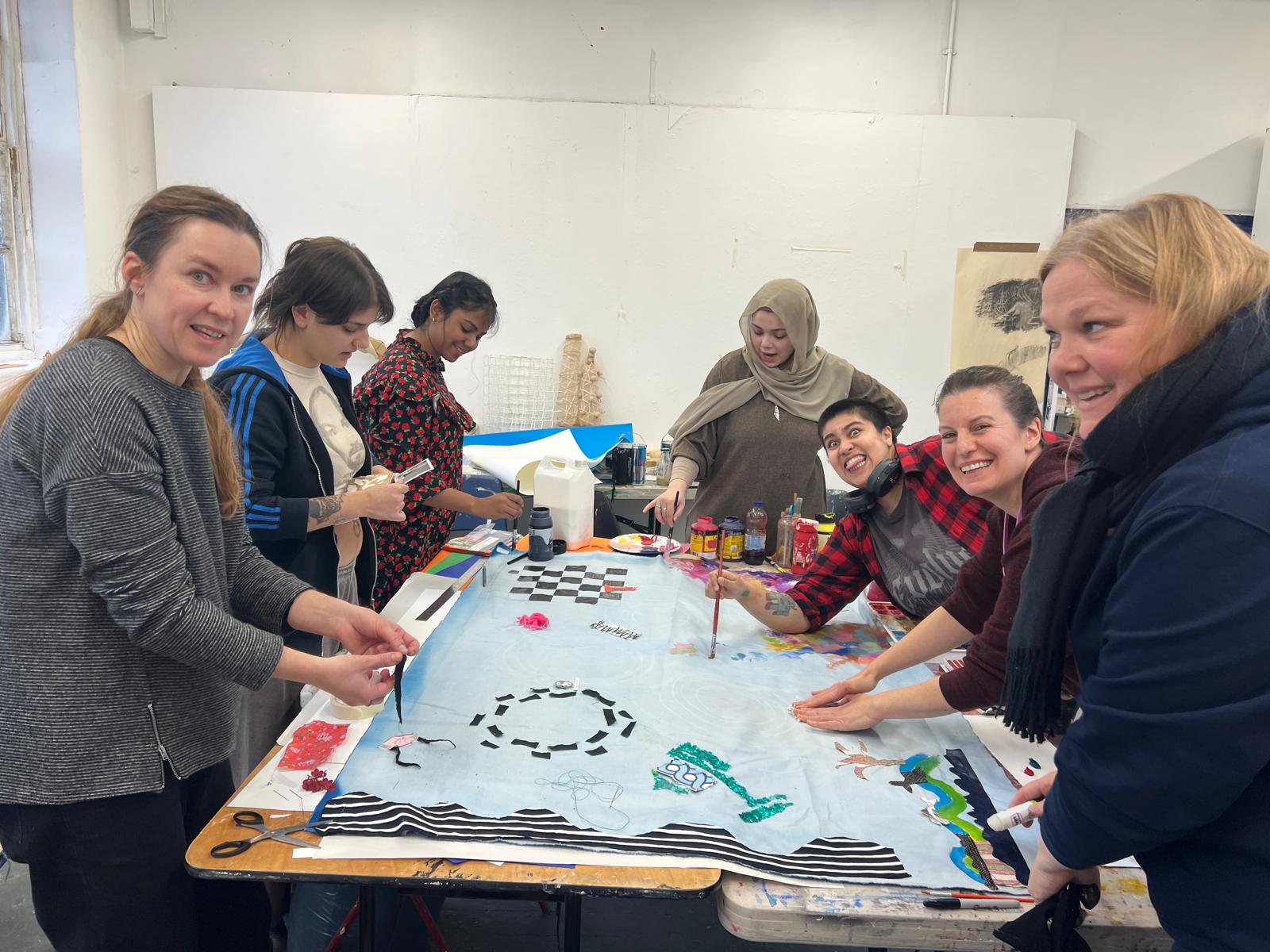
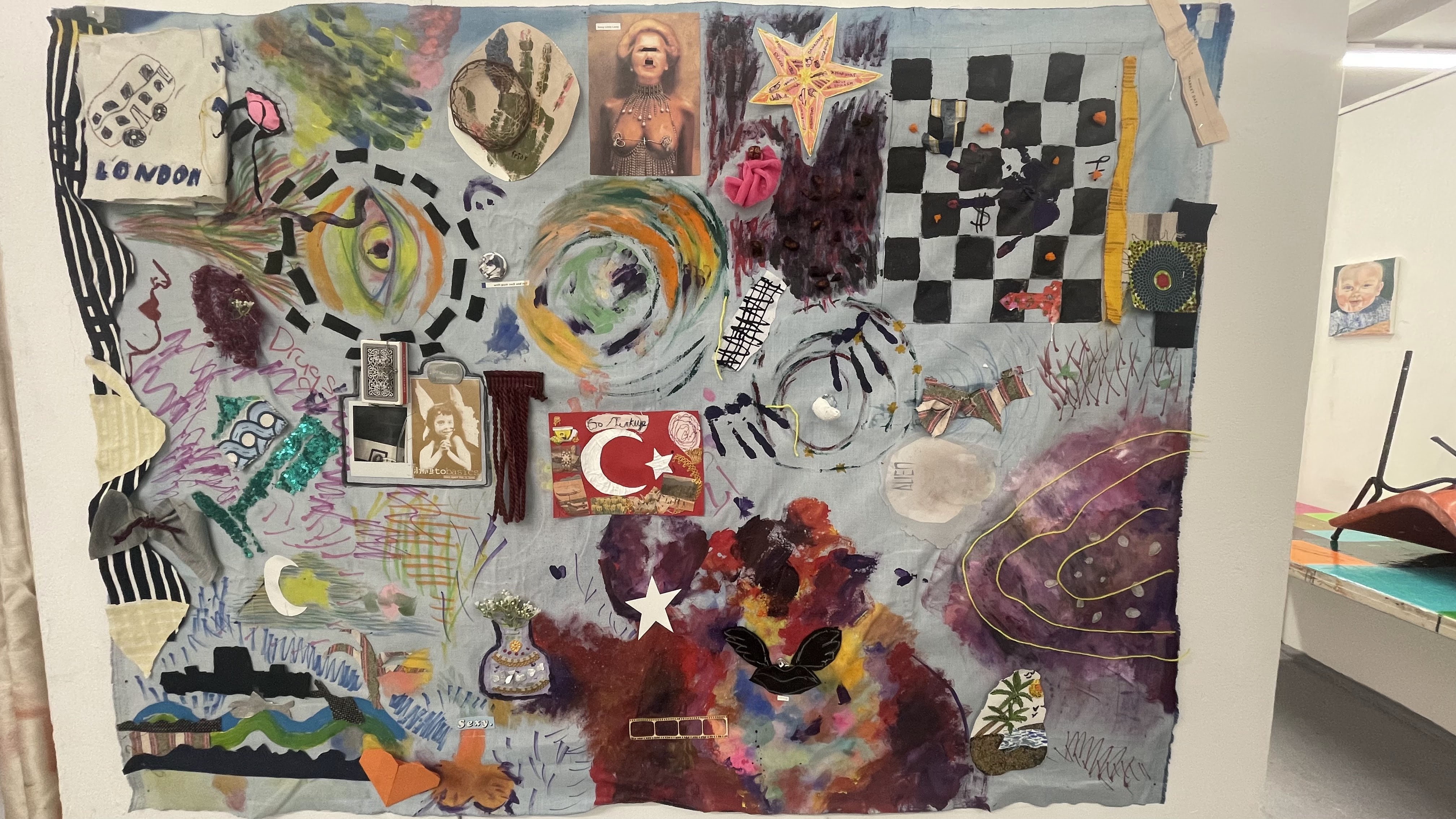
First week we created the draft
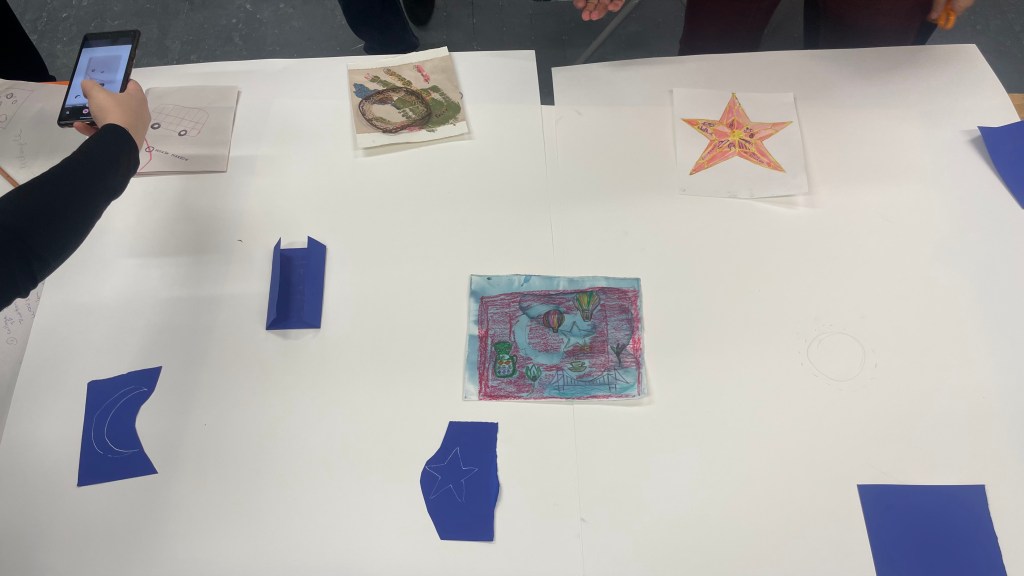
Then second week we had only 16 minutes to develop our drafts projects.
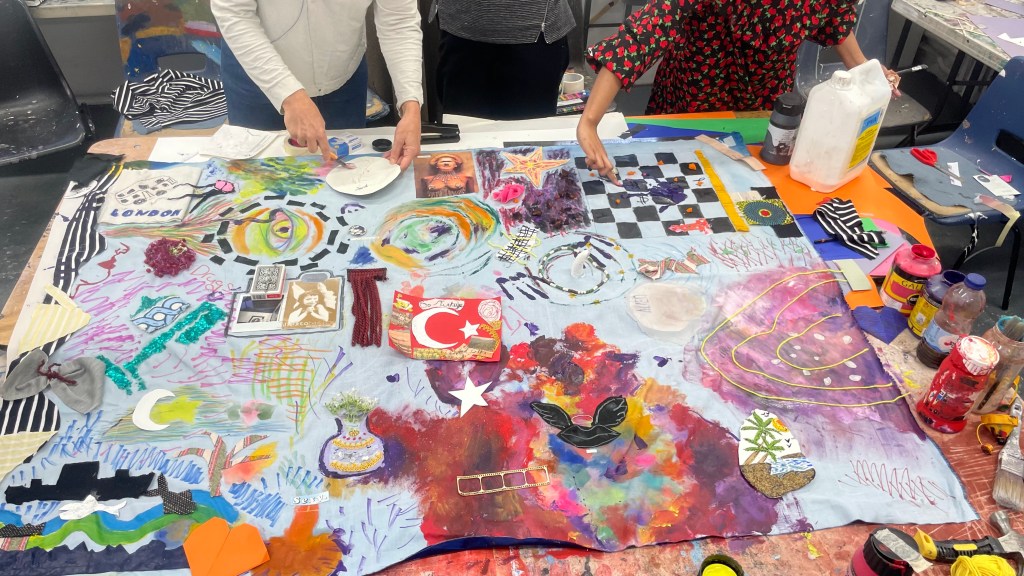
Free Motion Embroidery-Created in 4 minutes-Cappadocia Balloon
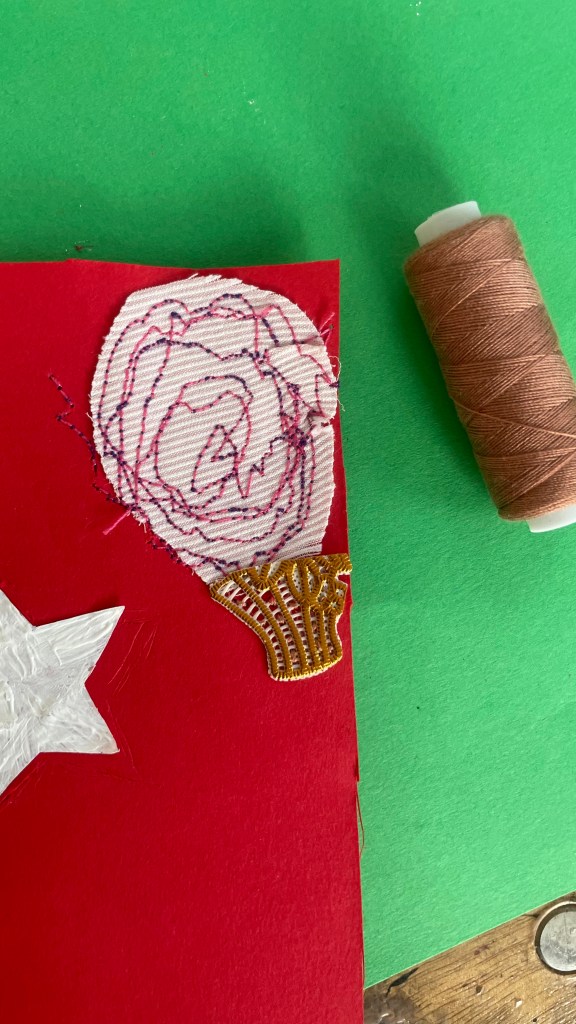
Embroidery- My material is a message.Go Turkiye, one of the part of my flag.
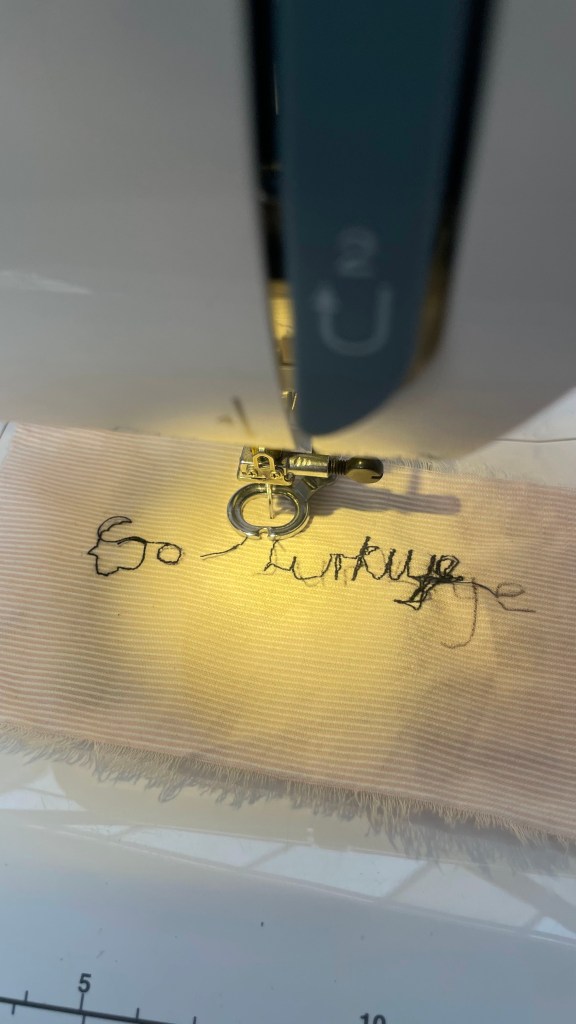
Created in 4 minutes-Vase
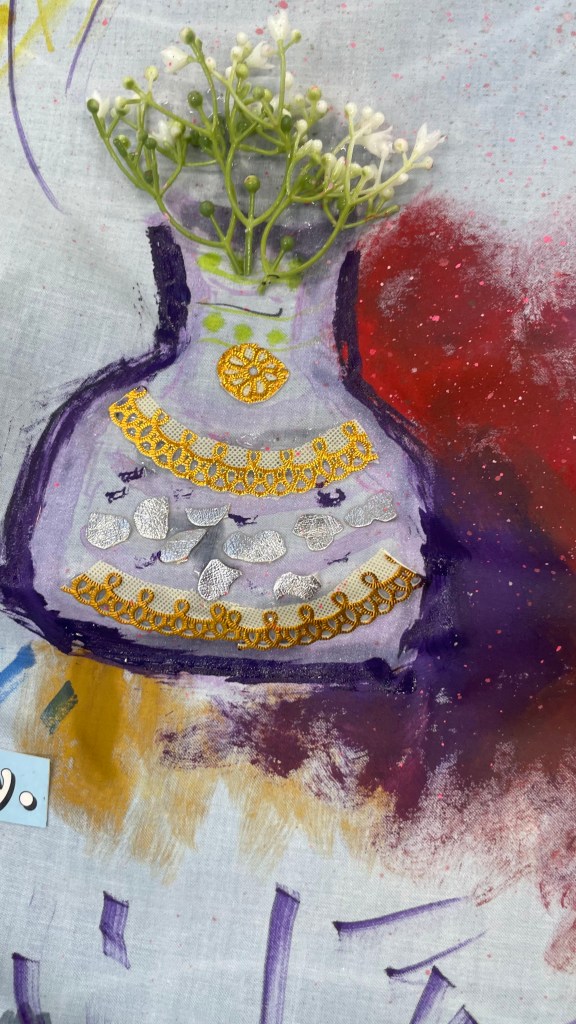
Created in 4 minutes -Bloom Into a Flower
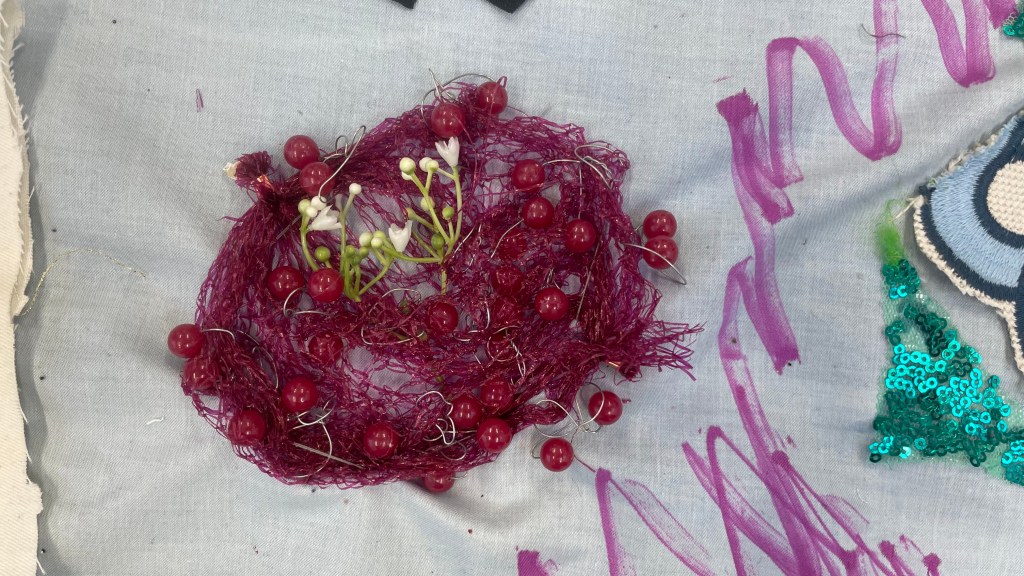
Created in 4 Minutes-My Country – Turkiye

Created in 4 minutes – Fire (On 21st Jan. a fire at the ski resort hotel in Kartalkaya-Turkey killed at least 78 people)

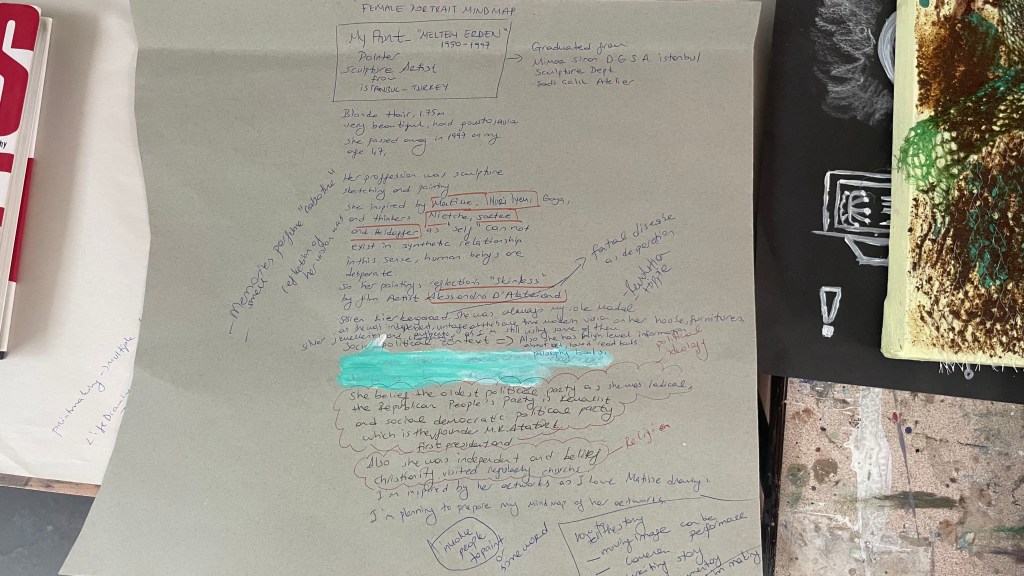
Female Portrait Mind Map
MELTEM ERDEN (1950-1997)
It wasn’t easy to do the subject of “Participation and Performance Of Female Family Member Portrait.I choose my iconic role model, best friend of my important milestones of childhood, my lovely aunt Painter-Sculpture Artist Meltem Erden- Ressam Heykeltras Meltem Erden-Graduated from D.G.S.A (Devlet Guzel Sanatlar Akademisi- Mimar Sinan University – Sadi Calik Atolyesi) – Sadi Calik Atelier in 1978, started to work in Maltepe Kasim Koçak Atelier (Maltepe Art Gallery Istanbul Maltepe Sanat Galerisi Istanbul) in 1989. She had participated lots of group exhibitions and her first solo exhibition had been in 12th-30th June 1997 in Maltepe Art Gallery Istanbul.
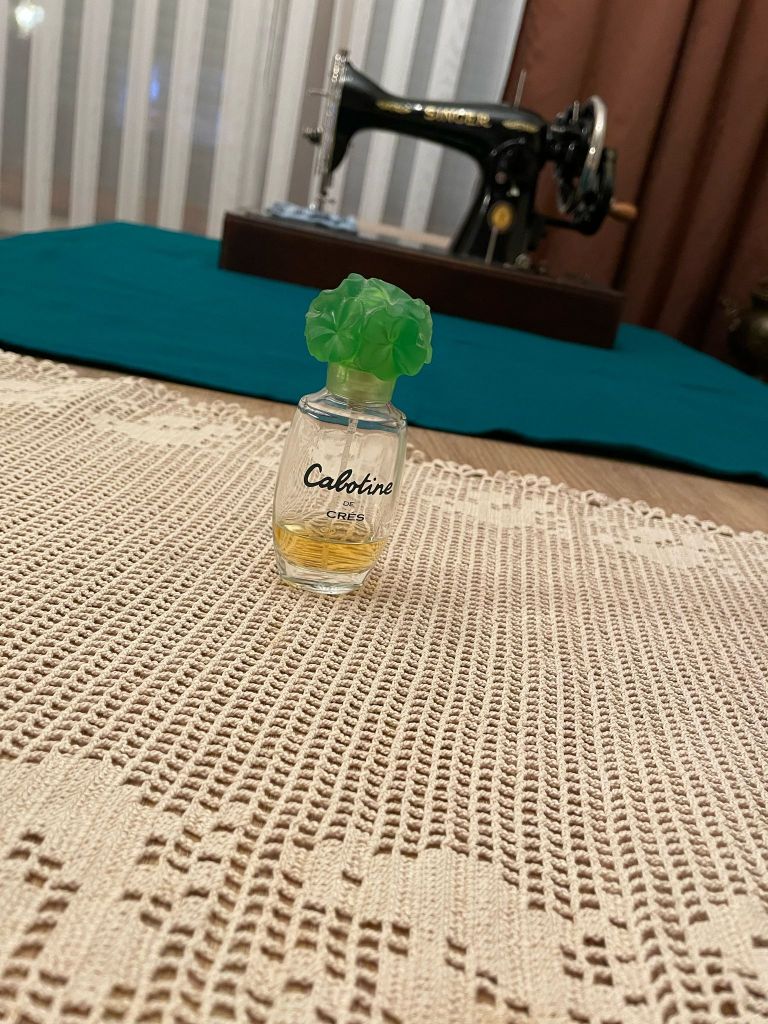
I have created a mind map as physical appearance, education, belief, memories, paintings. I’m glad to keep and use some of her items as silver jewelers , a winter skirt and a jumper, blouse that she bought for my birthday. Also in my memory of her i buy her favorite parfume Cabotine, listen Elton John and some favorite songs i remember, read her art books such as Soutine, Cezanne, Gauguin…,bake her favorite apple cake, green beans…
I have created a Facebook account for my aunt to share her paintings, solo and collaborative exhibitions, plan and develop her website soon.
About Meltem Erden’s Solo Exhibition in 1997
https://www.facebook.com/share/g/1JKPk6ajXP/?mibextid=wwXIfr
Despair… an asset and a liability… Filiz Ozdem
In the history of philosophy, superiority of the humankind to the animal has been expressed as the ability of the humankind to invent tools and to think, that is, to function as beings who can create technology and culture.
Sören Kierkegaard, the father of existentialism, has claimed that the superiority of humankind to the animal is connected with ‘suffering'(1).
According to Kierkegaard, humankind is the synthesis of finite and infinite, transient and permanent, freedom and determination.
Kierkegaard, a thinker who influenced many other thinkers such as Nietche, Sartre, and Heidegger says that “self” cannot “exist” in this synthetic relationship. And in this sense, human beings are desperate.
According to the thinker, our despair and suffering is an asset because it differentiates the human from the animal; however, it is at the same time, the terrifying aspect of our helplessness, it is a lack, because it marks our utter annihilation.
Kierkegaard defines desperation as equivalent to the soul and the “self” and thinks of “desperation” as a feeling that is generated by
“responsibility”. Perhaps this is the climax in the ideas of Kierkegaard, who has influenced both atheist and non-atheist thinkers.
The moment despair turns into creativity
A fertile stop in the route in which desperation turns into a fatal disease is creativity, for sure.
Suffering makes a human being speak out. It digs one’s depth. It “wipes” one’s skin off. In 1996 Istanbul Film Festival, in an Italian film entitled “Skinless”, directed by Alessandro D’Alatri, a film which the “mad” were treated with a humanist point of view, there was a striking scene. Gina and Ricardo are a couple living quietly on their own. However, one day when Saverio, an extremely sensitive, mentally ill, young man, falls in love with the woman, all their life becomes disturbed. The man who gets angry at this young lad and goes through fits of jealousy, in the first place, learns how to understand him and help him later on. The thing that pushes Ricardo towards such an understanding, is a sentence that the doctor utters in a session with the young man. The doctor tells the man that all of us suffer and we all have a skin, a border line against the sufferings that come from outside, while Saverio cannot stand these sufferings easily, because he has got no final border, he has got no skin.
This explanation affects the man deeply and urges him to think.
For Kasim;
Assume you received a letter from your lover which says
I went to a dark country,
I got lost in the labyrinths of my soul and mind, I was left in the purgatory, I could not pass to any side, tell me, where do I belong, she asks,ants that see dreams,horses that are like spears with purple flames, those snails that mutter songs, dreamy covering with a shell colored like the blue sky, those children who believe in tales,mirrors that one goes through to other colors, do I belong to that love world of pomegranate seeds…or to the world of forgotten words…
those does that offer their light rose nipples to the rough vultures, those tamarisk trees that break apart and fall over while muttering their words to their flowers
those knights with broken helmets
who accept remorse as a wild, rough suffering… what do you say to her?
I am grounds of coffee, I know the depths, a river passed by, cutting my neck, grasshoppers who have run away drank my water is that what you say…
you are a friend, set up oasis in deserts, bring out rabbits out of your hat, go and talk to the Satan if required…
The world of objects and us
Meltem Erden’s paintings are “skinless”; they are broken verse embellished with an inner quiver, pessimism, loneliness, that touch the veins which wander under our skin, that final border, products of a great courage, openness, and a sincere, one to one, direct disclosure.
I am cold, hug me, that erased portrait left in the past, find the letters of harmony, throw the dice in place of me, paint my inside, hold my hand
I am undressing gradually, there is both night and a cave inside me I planted seedlings in your pitch dark garden, don’t leave me,let us read poems in their shade.
The nude figures in Meltem Erden’s paintings make fun of the world of objects, and reduce the border between the world of “I” and the exterior world to zero. And this is what her paintings owe their striking nature, depth and frankness. Her art is, therefore, cold. Not that the colors are cold. In the content of the paintings in which mostly warm colors are used, there is something that is freezing; a stormy atmosphere is dominant.
my body
that changing snake of mine
my cold container in its blue transparency
In Meltem Erden’s art, the striking thing that attracts attention in all the bodies is the difficulty of the bodies to stand upright; they are jelly-like masses that are drawn to the ground, squeezed. and heads and shoulders are pressed down. Bodies are depicted to be like bags of dough. “Time is Shiething in between ‘now’, which is almost dimensionless, the ‘past’, which does not exist any more, and the future, which does not exist as yet; hence it is something that exists only by remembering and waiting.” (Augustinus)
The artist sets the body out for a journey in the piece of time between childhood and old age – considering memories, hopes, disillusionment and loneliness- and uses the time like a ladder, dispossessing its classical definition. The artist’s paintings can be considered as works of “sinking down” in a sense. She uses the method which is common in branches of literature and art such as fiction (short story and novel) and cinema, she grasps a peculiar taste of expression with the “doughlike” expression she assigns to the body.
The subconscious opens up in Meltem Erden’s paintings. In her paintings inspired by the technique of stream of consciousness, there is not, however, a Freudian approach which claims the primacy of the phase of childhood whereby the self is shaped by the mother and the father. The responsible person is the ‘self ‘himself or ‘herself. Each self carries the responsibility on his/her shoulders. The self is weakened under this weight. While the self realizes his/her reality, his/her container cannot carry his/her existential being.
I saw my face later
Gang-boards are set in my eyes
Nonetheless, I am a roundish pear where is my seed
where is the distance between myself and my flesh
Even though bodies appear next to each other, winding into each other on the canvasses, one can clearly see the emotional distance, isolation and loneliness in between.
Finally we can say that a human being conserves a double-end loneliness in himself/herself. It is on the one end a loneliness which cannot be hindered despite the presence of others; and on the other end is the loneliness that the world of objects, the external world of reality lasting with no need for us presses on us. Isn’t this the reason why human beings try to treat objects with human characteristics in tales, poetry and dreams, and attempt to make this world close to himself/herself, to make it speak so that the estrangement is broken?
Meltem Erden’s paintings are works related to “stairs”; steps invite one to interiors, to the bottom and depths, to the cellars, to regions into which sunlight does not enter. At this point, desperation keeps a hope within. If we don’t let other hands or ourselves break the steps that we have climbed down, we know that the staircase is kept in between. The steps climb upwards and the sunlight is there.
My presentation with my aunt’s paintings
MIND MAP
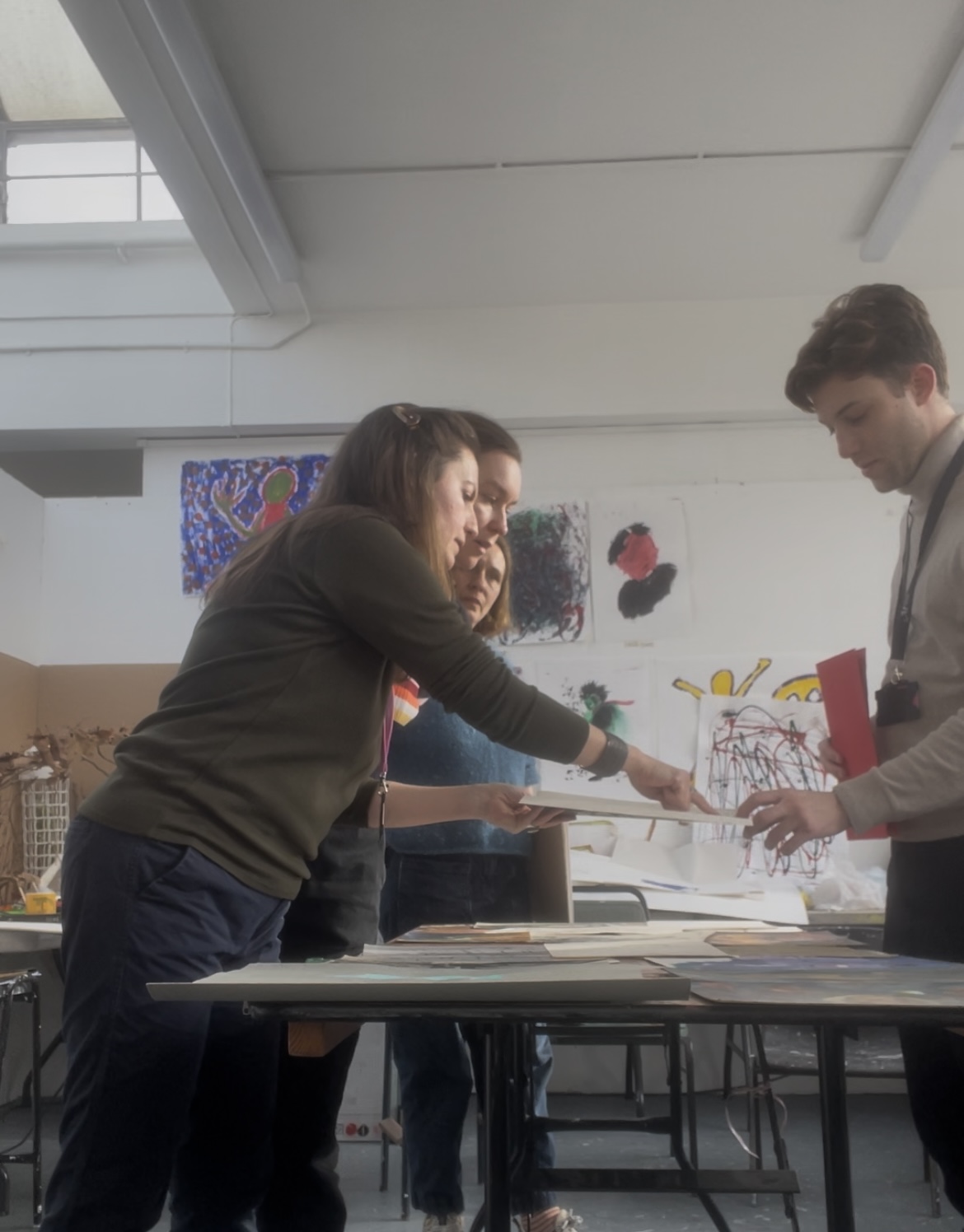
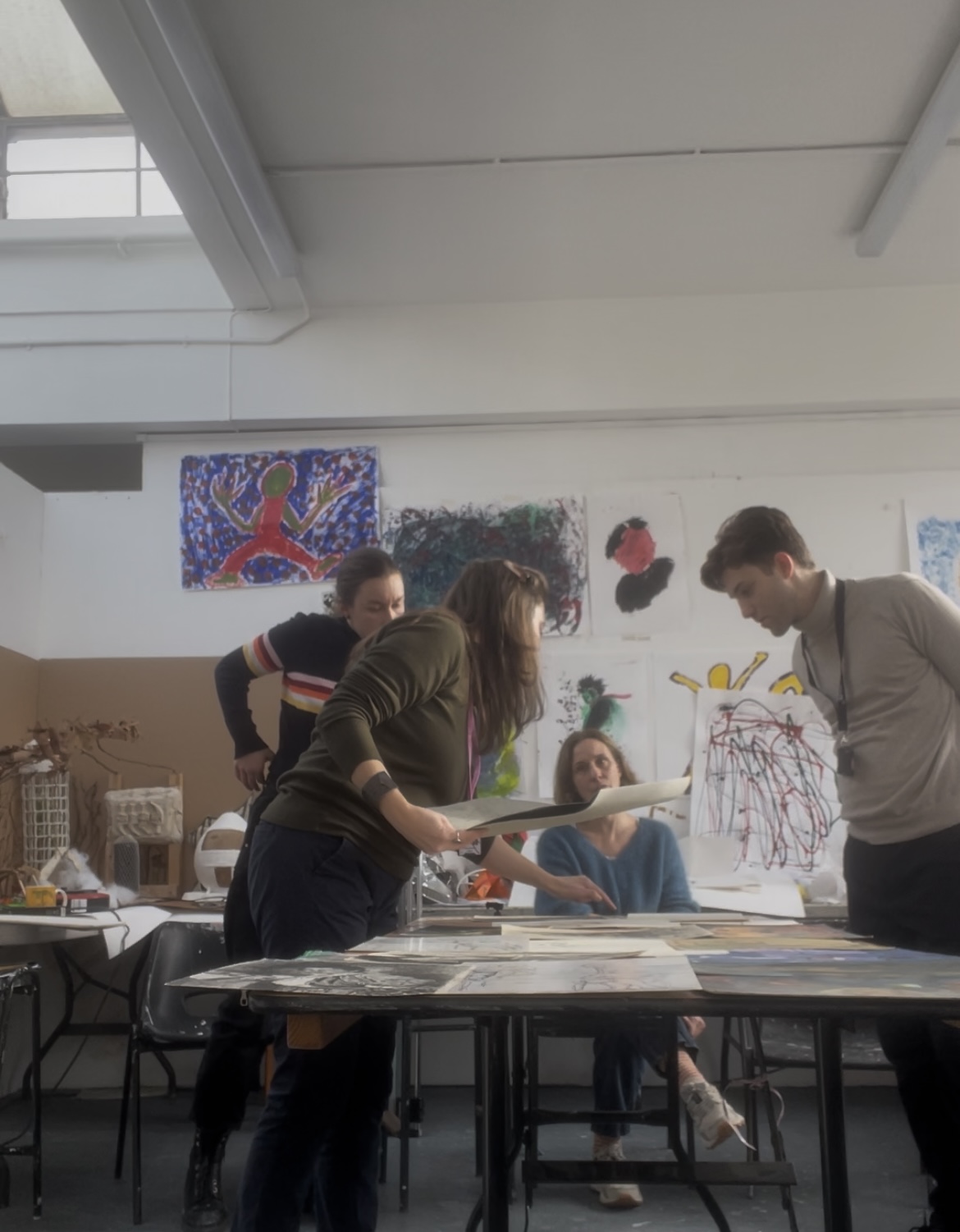
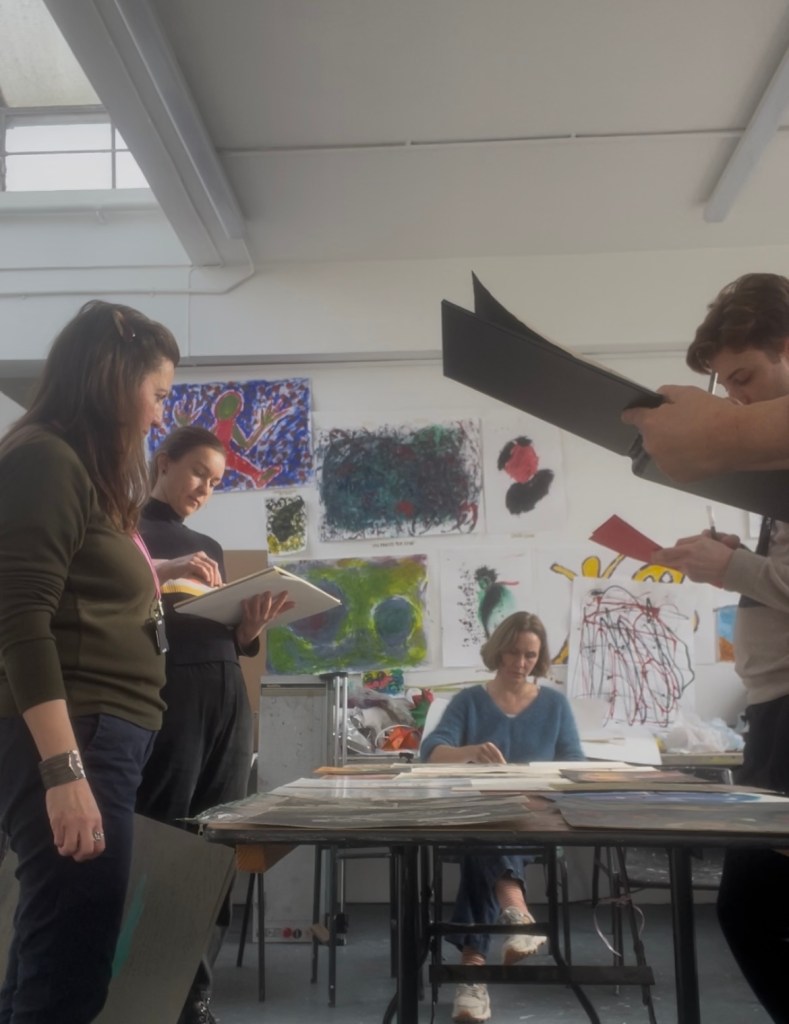
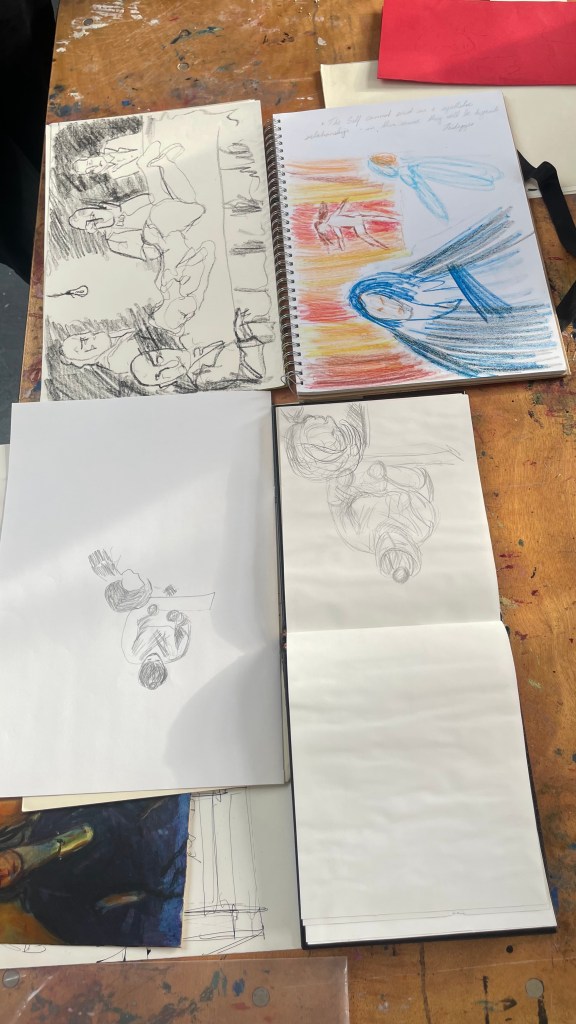
After i finished my presentation about my aunt’s life journey we had small workshop about her paintings and my peers did some participatory work they create related my aunt’s art paintings.
INDIVIDUAL ART WORK
For my individual art, I used Kandisky’s circles which i was made before we decided to create “The Giant Siphonophore” to make one of my individual string with my own and created other strings to with different materials include student’s messages that i’ve made for our “Visions Of Future”.
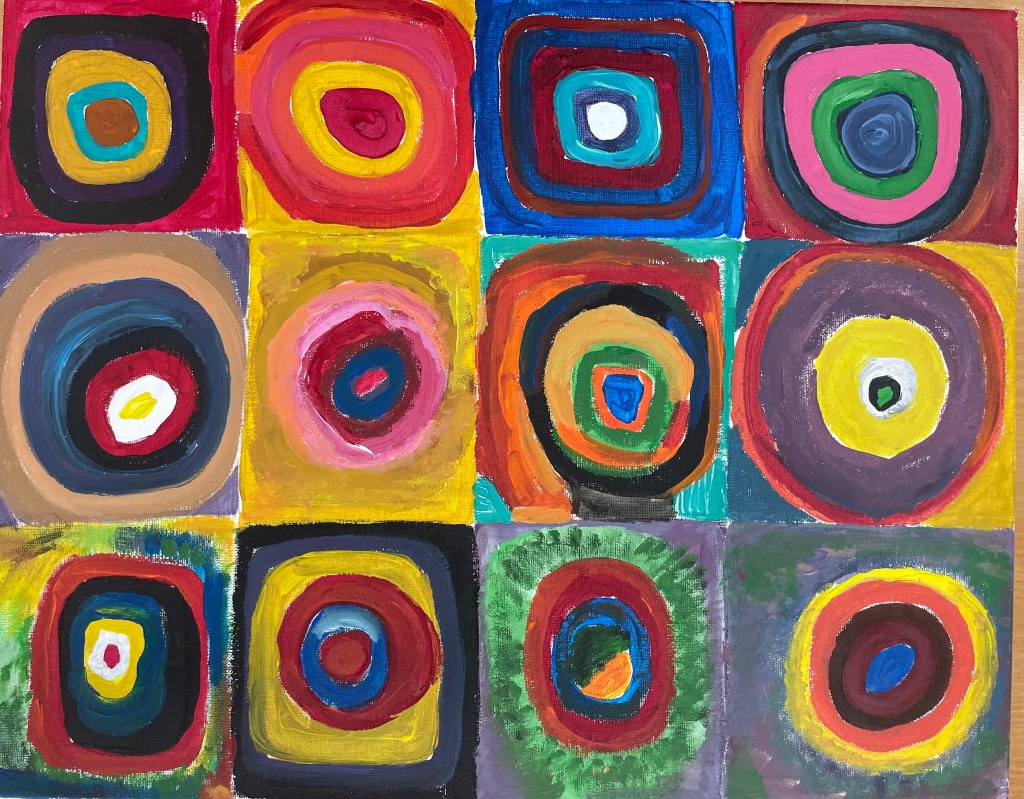
For my individual project i cut each circles, used hole puncher to attached them with metal wire form of concentric circles.I walked on these circles slowly, reading these small papers of my husband’s wish responses written on them loudly then i put them inside of the big circle and made a wish for myself. I’m glad that my small performance gives some message to someone who make wishes for the future.
This participatory artwork transforms individual hopes, fears, and reflections about the future into a collective visual language of vectorial concentric circles. Each circle represents a personal perspective, layered like time as imagined futures.
The circles are connected with metal wire spirals, symbolizing dialogue, connection, and slipped between them are future messages of my husband’s responses to questions about the future from fear of isolation to dreams of more freedom and compassion.I am thinking the assembled installation contrasts human emotion with the mechanical backdrop of modern life.
Let’s think about the future looks like when we see it not just individually, but together.
Our survey questions and my husband’s responses;

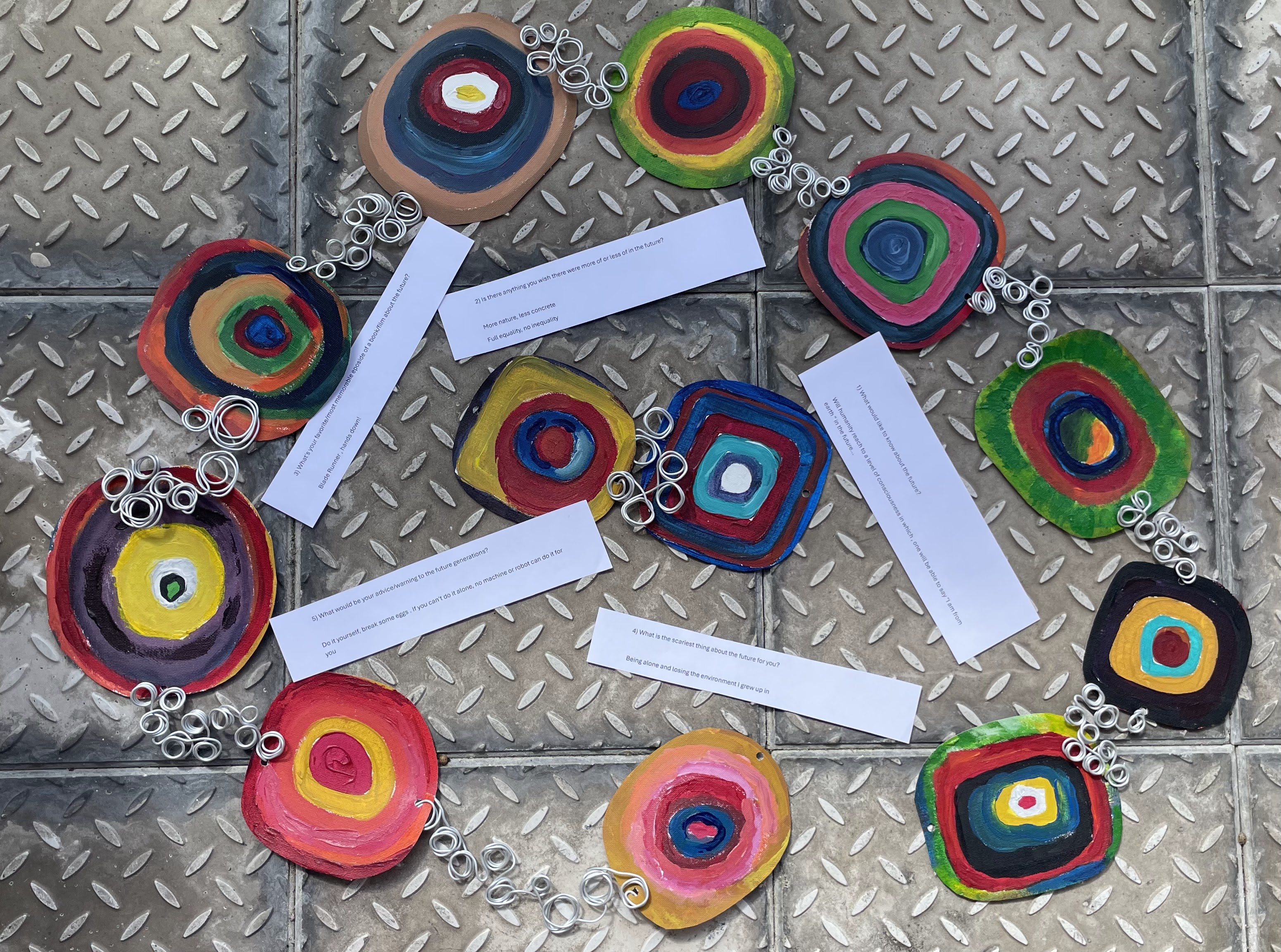
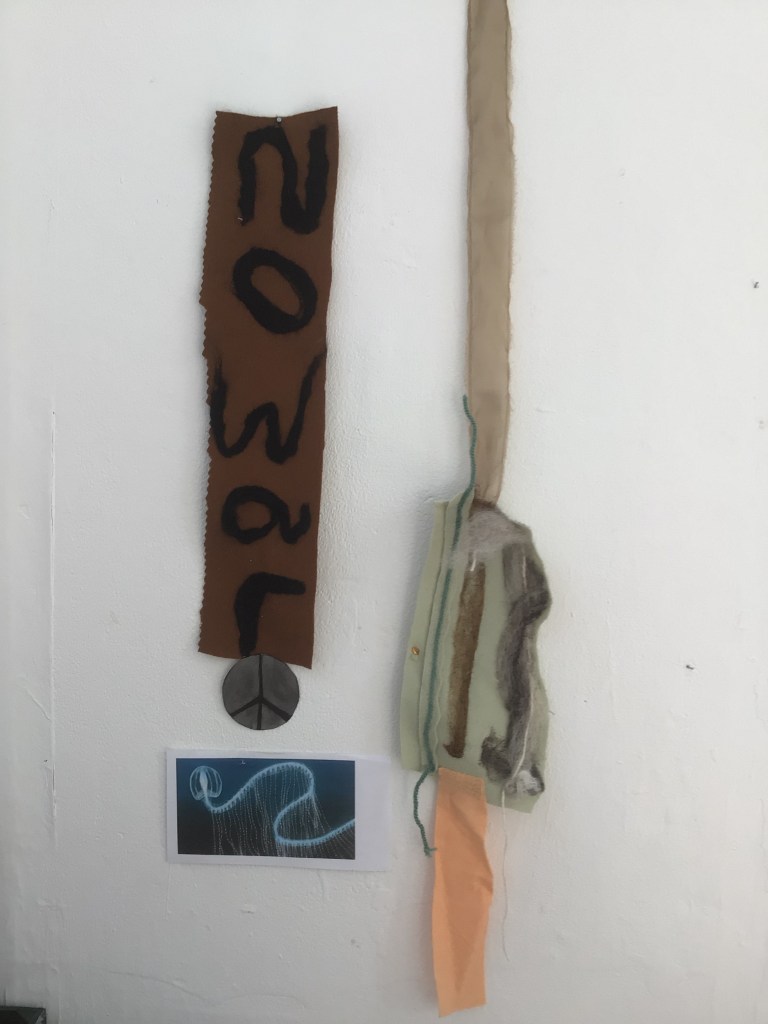
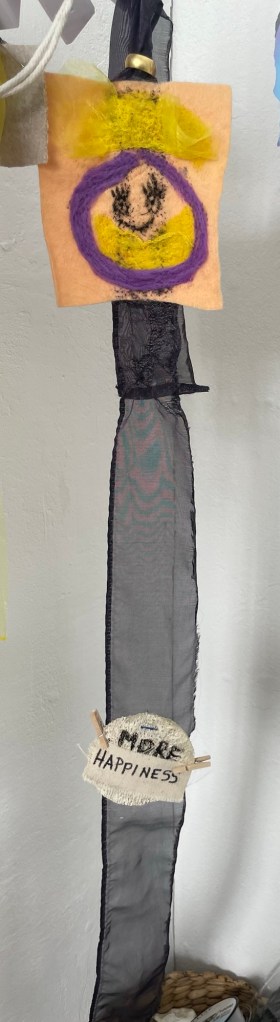
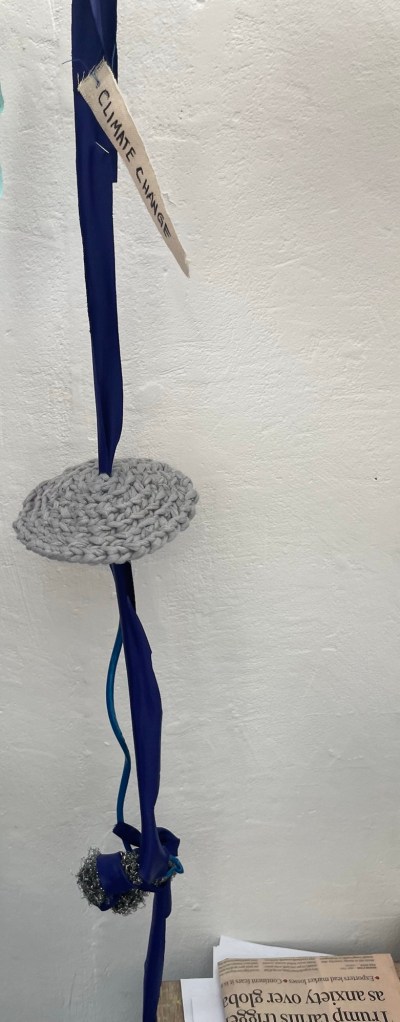
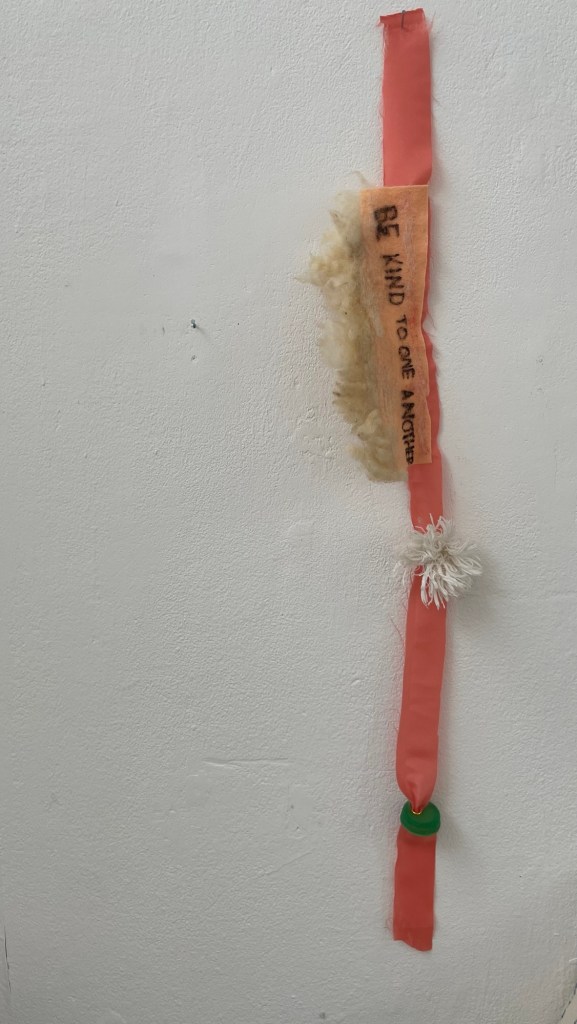
My other individual strings with wish responses and felting practises with figure of ‘The Giant Siphonophore’ and wishes for future.
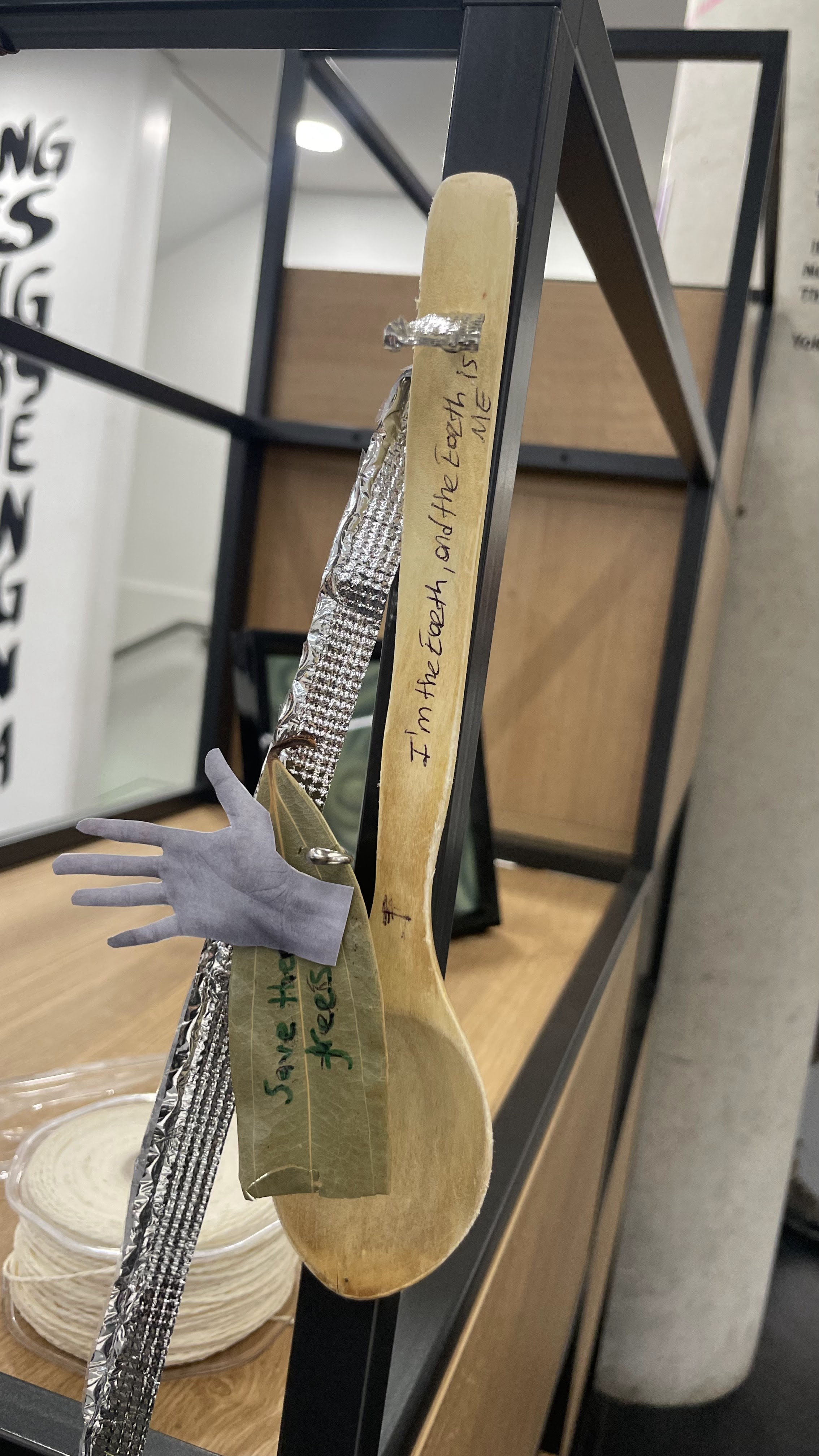
I really enjoyed while i was doing felting process that matter together wool fibers to create an unwoven textile also used natural cotton with felting machine.
These strings and felting parts might be an individual part of the Siphonophore on our project “ Visions Of Future”
Tried “The Giant Siphonophore” on linen with felting machine
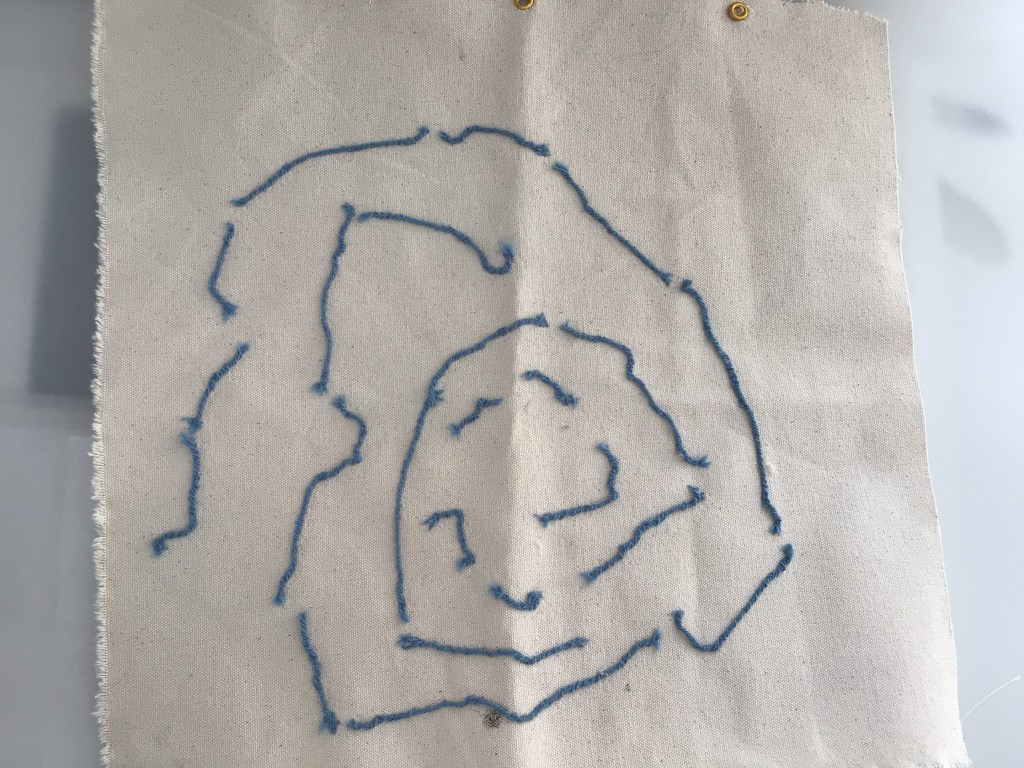
Strings with felting technique using felting machine
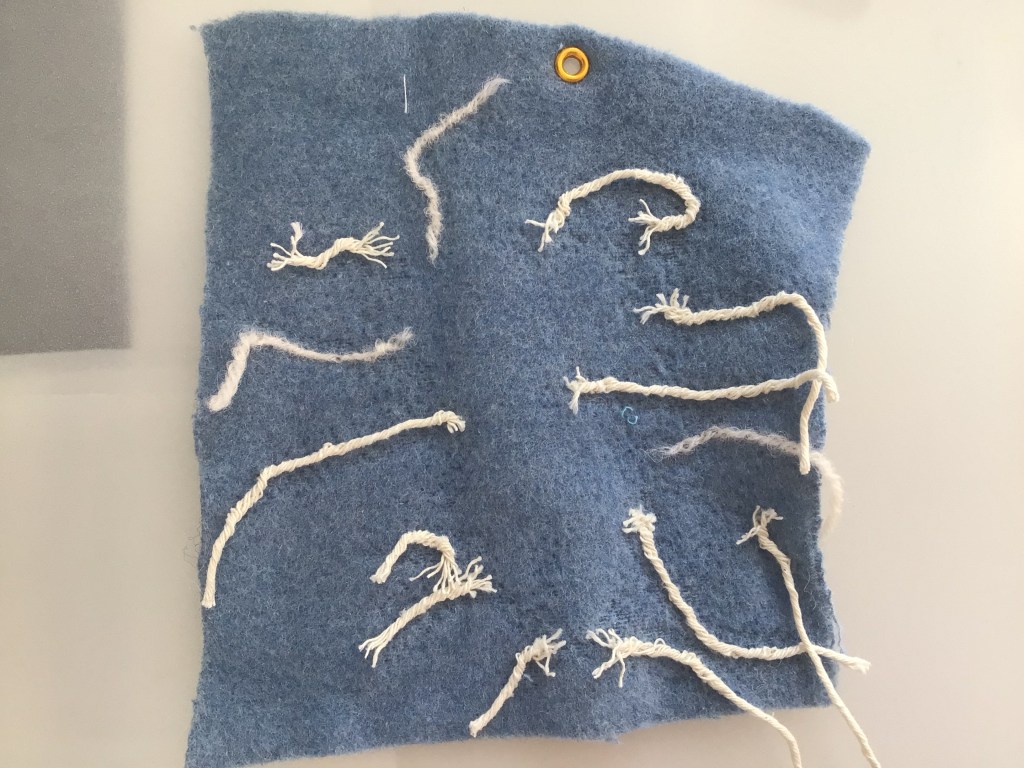
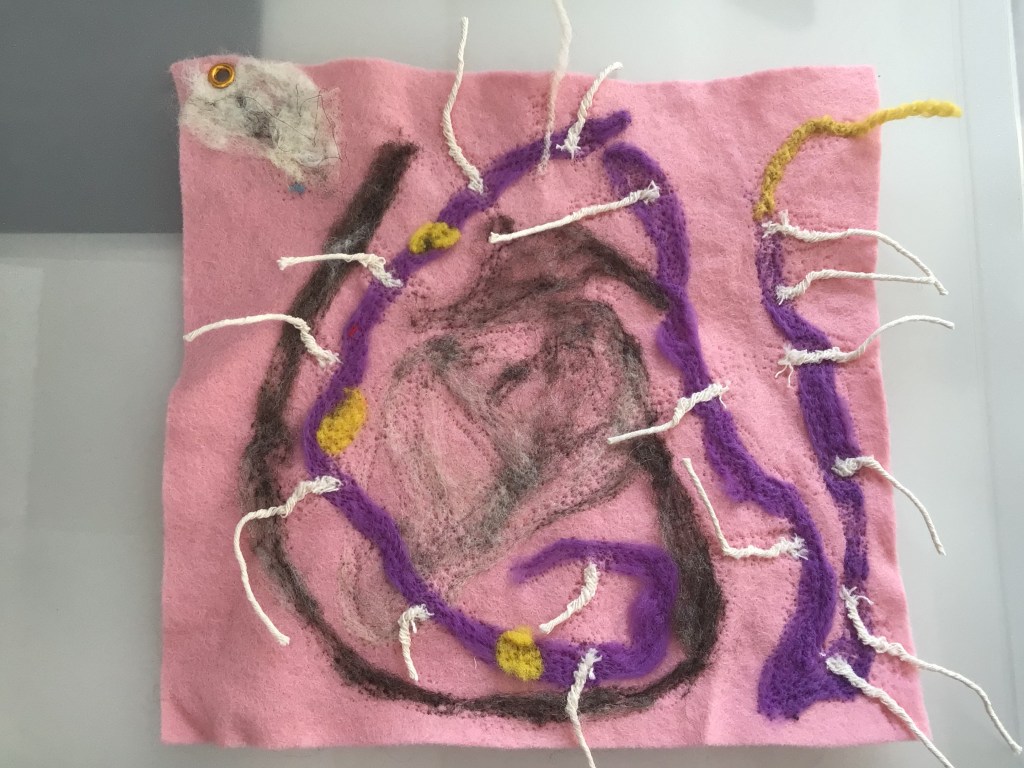

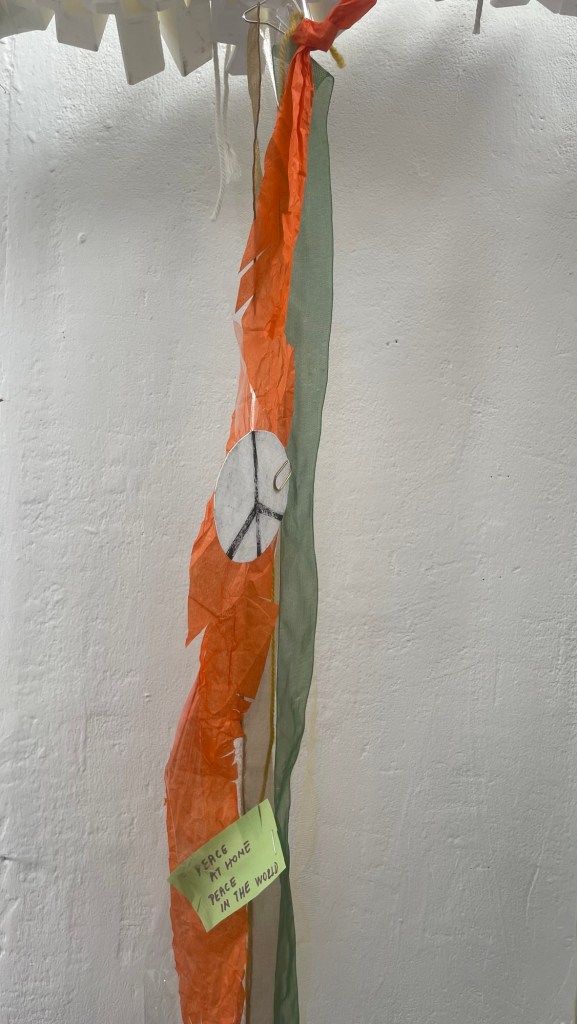
Peace At Home Peace In The World!
 Art Republic